0% Complete
صفحه اصلی
/
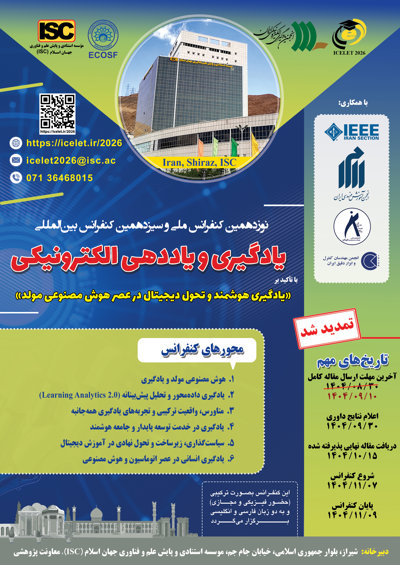
نوزدهمین کنفرانس ملی و سیزدهمین کنفرانس بین المللی یادگیری و یاددهی الکترونیکی ایران
Evaluating Iranian University Faculty Members’ Attitudes toward E-Learning
نویسندگان :
GholamAli Montazer
1
Zeinab Abbasi
2
Mahdieh Farazkish
3
1- Tarbiat Modares University
2- Allameh Tabataba'i University
3- National Research Institute for Science Policy
کلمات کلیدی :
Attitude،E-learning Evaluation،Iranian Universities،E-learning
چکیده :
Faculty members’ attitudes are a key determinant in the acceptance and effective implementation of e-learning in higher education. Understanding these attitudes supports the design of more conducive digital learning environments. This study investigates Iranian university faculty members’ attitudes toward e-learning through a conceptual framework developed from previous studies. The framework classifies indicators into two categories: internal factors (cognitive, affective, behavioral) and external factors (institutional, technical, and environmental). An online survey of 7,400 faculty members across Iranian universities revealed generally positive attitudes toward e-learning. External factors were rated as “good,” while affective and behavioral components were “above moderate,” and the cognitive dimension was the weakest (“moderate”). The findings suggest that, despite institutional readiness, challenges persist in deepening faculty understanding and engagement—highlighting the need to strengthen motivation, participation, and cognitive awareness to consolidate e-learning in Iran’s higher education sector.
لیست مقالات
لیست مقالات بایگانی شده
نقش هوش مصنوعی بعنوان مدرس در آینده تدریس در سازمانها و صنایع: چالشها و فرصتها
نوشین لطفی - مصطفی کیانی فر - مرضیه اسمعیلی
طراحی محتوای CCDI دانشآموزی: چارچوبها، رویکردها و مدل بومیسازیشده
حسین رضائی استخروئیه
Extracting the main aspects of E-learning readiness assessment for Iraqi universities
Yasser Kareem Al-Rikabi - Gholam Ali Montazer
Gamification plays a role! enhancing the collaborative decision-making skills and strategic thinking abilities of employees
Zahra Vatankhah - Nasrin Mohammadhasani - Yousef Mahdavi Nasab
Applications of Large Language Models in Collaborative Learning: A Systematic review
Soraya Shokry pour dehghan - Maedeh Mosharraf
Intelligent E-Learning Environment Customization Based on Kolb's Learning Style Model
Tahereh Sanjabi - Gholam Ali Montazer - Alireza Abdolhosseinzadeh
Improving Children’s Brushing Habits: The Role of E-Learning in Oral Health Education
Seyyed Najmuddin Amirshah Karmi - Asma Yazdi - Firoozeh Alavian
درس آموخته های سیاستی آموزش الکترونیکی در دوران همه گیری بیماری کووید- 19
غلامعلی منتظر - مریم علی اکبری - مهدیه فرازکیش
Interactivity Variable in the Process of Online Gaming: The Scrutiny of Its Role in Learning English Vocabulary via Tech Platforms
Zari Saeedi - Mahdi Rezaei - Hossein Bagheri
تأثیر تحقیق و توسعه بر توسعه یادگیری الکترونیکی در شرکتهای دانشبنیان و کارگاه های صنعتی ایران
مهلا افشارپور - مهشاد افشارپور
بیشتر
ثمین همایش، سامانه مدیریت کنفرانس ها و جشنواره ها - نگارش 44.0.6